Find the product
Visitors from search or ads need a relevant product or category page. Site search and filters help them find a suitable option.

We help your online store connect product visibility, advertising and an easier buying experience. Priorities depend on where shoppers get stuck and the sales you want to achieve.

Ecommerce marketing involves more than choosing an ad platform. Your product range, stock, margins and buying experience determine what is worth promoting.
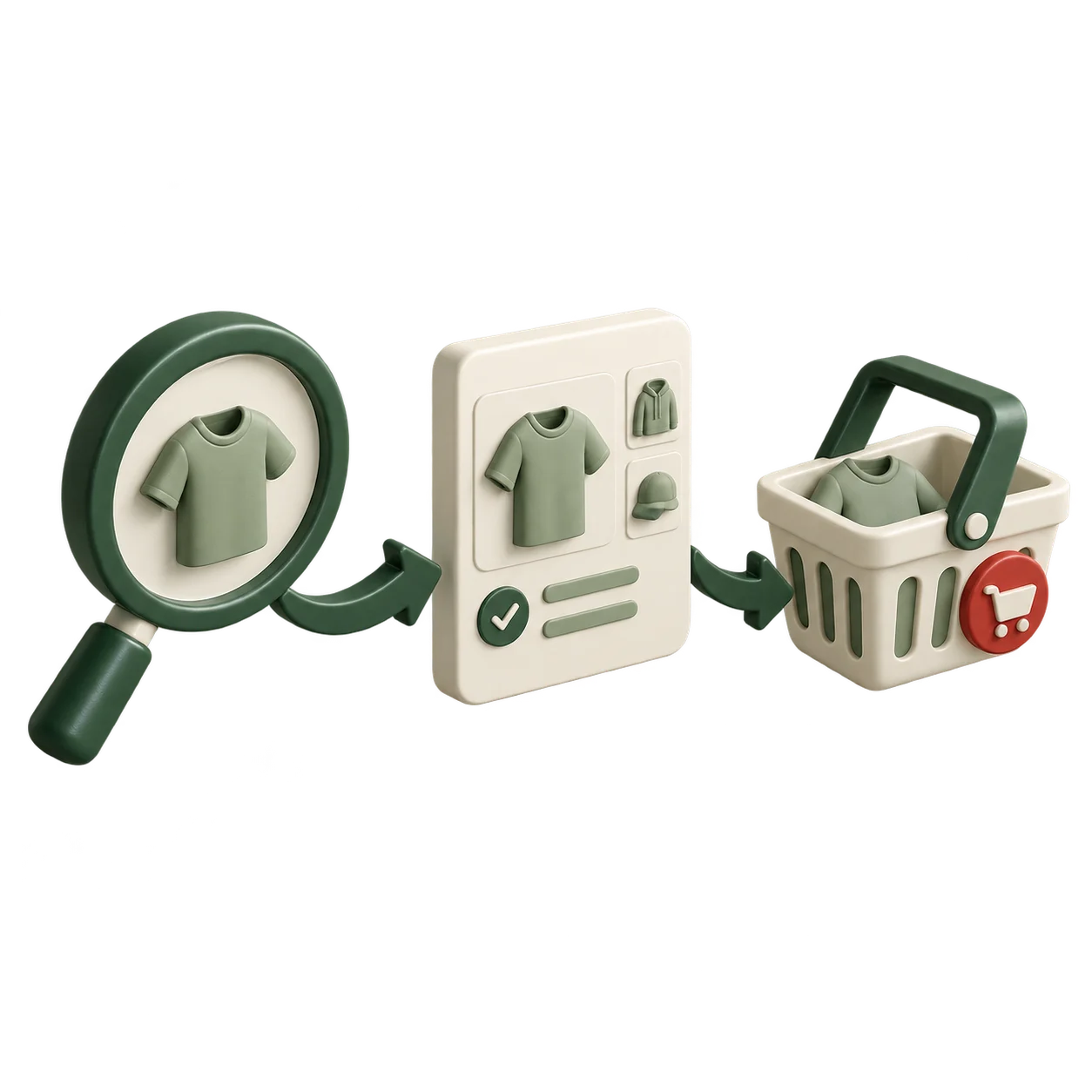
Visitors from search or ads need a relevant product or category page. Site search and filters help them find a suitable option.
Explain features, variants and availability. Shoppers should not have to guess delivery costs or return information.
We review the cart, forms and payment handover on mobile too. Technical errors or unclear fields can interrupt a purchase.
A digital agency’s work must fit your ecommerce platform and business. We review the starting point and agree on whether Revla, your team or your existing provider implements changes.

We improve structure, internal links and useful buying content. The focus is on ranges you want to sell and can deliver.
We plan search and product advertising as needed. Product details, prices and availability should support the ads; feed implementation responsibilities are agreed separately.
Product use, benefits and different messages help introduce your offer. We agree on goals, audiences and assets. Ad and video production are priced separately.
We identify where buying becomes difficult and implement agreed improvements. A/B testing depends on traffic and purchase volume.
Low sales can have different causes: products are hard to find, selection stalls or payment fails. Current traffic, purchase events and orders help establish what to investigate before increasing advertising.
If priority product and category pages receive few visitors, examine demand and current traffic sources. Search visibility, product information and existing advertising help assess whether buyers are missing your products.
Establish whether visitors are suitable buyers and have enough information to choose. Price, delivery details, product options and mobile usability can influence the decision; visitor numbers alone do not explain the cause.
An abandoned checkout does not always mean a technical error. Reviewing total costs, forms, payment methods and actual orders helps distinguish purchasing obstacles from gaps in tracking.
Do these situations sound familiar? In a free consultation, we review your current situation and assess together what to improve first.
Book a consultationA useful product page helps shoppers assess suitability and total cost. We also review the cart and checkout so information remains consistent through the purchase.

We track agreed purchase events, revenue and advertising costs. Return on ad spend alone does not show profit: product margins, returns and other costs also matter. We agree on the inputs and calculation method.
We compare purchases recorded in analytics with store orders and investigate missing or duplicate events. Different reports do not automatically show the same figures.
We assess advertising focus against demand, stock and profitability by range. Revenue growth alone is not always the right goal.
This is an illustrative example, not a client case. When product pages receive visitors but few orders, we do not immediately assume the store needs more advertising or a new platform.
Compare analytics purchases with actual orders. Establish whether visitors are interested in the products and where purchasing drops off.
If delivery costs appear only at checkout or product options are hard to select on a phone, agree on fixing these issues and who will implement the changes.
Review orders alongside advertising costs, returns and margins using agreed inputs. Advertising is increased only when there is a basis for evaluating the decision.
These reviews describe how clients from different industries experienced working with Revla. Their original Finnish wording is preserved.
“Olen valmis suosittelemaan muillekin palvelujanne. Toimintanne oli asiallista, jaksoitte kärsivällisesti ohjata asiakasta oikeaan suuntaan sekä antaa vinkkejä sisällöstä. Yhteydenotto oli nopeaa ja vaivatonta.”
“No nyt suosittelen ilolla! Kaikki mitä sovittiin ja miten asiat hoidettiin, sujui loistavasti! Mahtavaa, että myös hoidetaan asiat loppuun saakka, eikä vain tehdä ja jätetä katsomatta mitä hyötyä teoista oli.”
“Päällimmäisenä ajatuksena on se, että voiko yhteistyö jonkun kanssa olla todella näin helppoa. Homma on toiminut ja joustavuutta on löytynyt iKone Marketingin puolelta.”
“Suosittelen ehdottomasti. Uskon, että hyvä asiakaspalvelu ja palveluiden kilpailukykyinen hinnoittelu kantaa pitkälle.”
“Oot siis enkeli btw jossei sulle oo joku sitä kertonut! Kaikki sujuu sun kanssa niin mutkattomasti.”
“Asiat sujuivat mutkattomasti. Pystyn suosittelemaan.”
“Tomi on niitä tyyppejä, joka hoitaa hommat jämptisti ja ajallaan. Omaa nälkää rakentaa, uteliaisuutta kasvaa ja nöyryyttä katsoa peiliin. Kaiken lisäks pirun hyvä jätkä.”
Tell us about your platform, priority product groups and goals. We need agreed access and information on sales, advertising and margins according to the scope. Before quoting, we check what we can implement ourselves and where your current supplier is needed. Platform fees, apps, integrations, advertising spend and content production are itemised as applicable.
Starting prices and scope are explained on the service pages. We agree on the scope and price before work begins.
Book a consultationNot automatically. We assess your platform, access and implementation options. A platform change is a separate decision if the current system significantly limits your goals.
If products are hard to find or a technical error stops purchases, fixing that is a natural starting point. Otherwise, priorities follow traffic, demand and sales findings.
Meta ad and video production are agreed and billed separately. Assets for Google campaigns and product data responsibilities depend on the agreed implementation.
Yes. We can handle advertising or plan improvements while your provider implements store changes, for example. We agree on responsibilities before starting.
Alongside revenue and ad costs, we need agreed information on margins, returns and other relevant costs. Without it, return on ad spend is not presented as profit.
It suits a store seeking to solve an identified visibility, advertising or purchasing problem and able to provide the required information. We assess the platform, implementer and available budget. If availability or margins are the issue, more advertising may not be the first task.
Our previous work includes a Shopify store rebuild. Changes to your current store are assessed separately based on the platform, theme, apps and access. Before quoting, we agree what Revla will do and where your current supplier is needed.
Responsibilities are agreed before product advertising starts. Current prices, availability, product details and agreed account access are needed. Feed implementation, error fixes and ongoing data maintenance are scoped separately rather than all being assumed part of advertising management.
When enough traffic and purchases accumulate to assess the proposed change. We evaluate this using current volumes and the expected effect. With limited data, we often start with technical errors, usability observations and missing buyer information.
Revla · content updated 13 October 2026
Background sources: Baymard: reasons for cart abandonment
Explore all industries